
Robert continues to see private clients. Private sessions are 3 hours and $300, focused primarily on common pain-related concerns, movement, and mobility rather than conventional relaxation massage. Appointments are arranged personally by text or email; there is no public online booking calendar.
Whiplash can affect much more than just the neck. After a sudden acceleration and deceleration injury, people may experience neck pain, stiffness, headaches, shoulder or upper-back discomfort, restricted movement, and symptoms that can persist long after the initial injury.
My approach to whiplash relief in Austin looks at the bigger picture. Rather than simply working where you feel pain, I look at how your neck, shoulders, upper back, chest, movement, and overall sensitivity may be contributing to what you’re experiencing. The goal is to find what changes your symptoms and build a practical approach around helping you move and feel more comfortable.
WHY WHIPLASH CAN BE DIFFICULT TO SOLVE
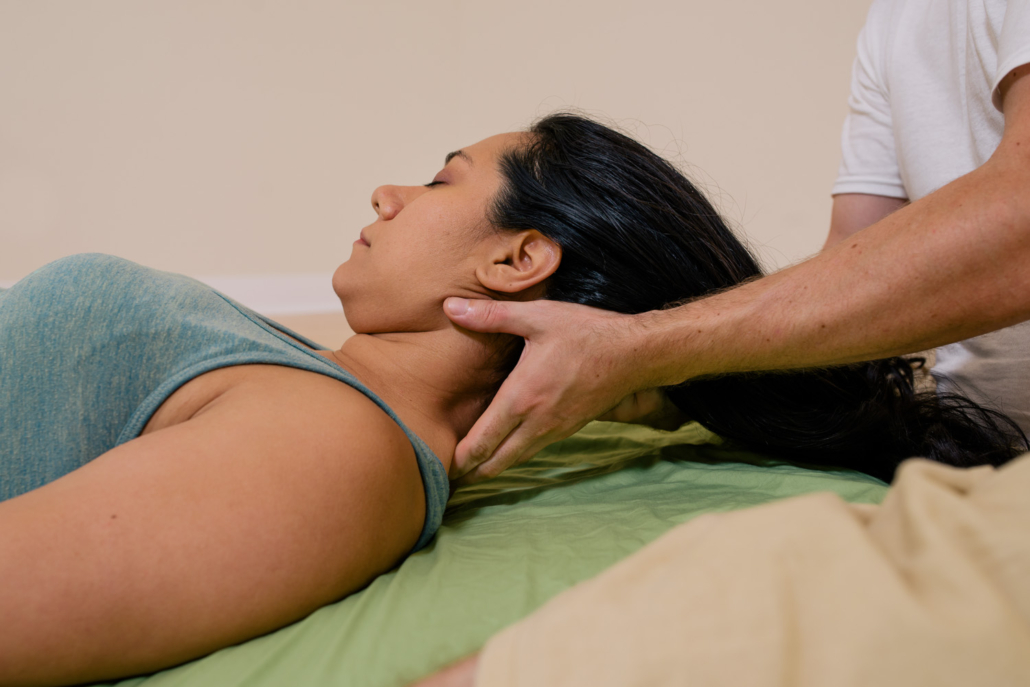
Whiplash symptoms don’t always follow a simple pattern. Pain and stiffness may involve the neck, but headaches, shoulder tension, upper-back discomfort, restricted movement, and increased sensitivity can also develop after an injury.
That’s why repeatedly working only on the spot that hurts may not address the larger pattern. I look at how the neck and surrounding areas move and respond, how your symptoms change with different positions and movements, and what seems to help you feel more comfortable. From there, I use hands-on work, movement, stretching, and self-care strategies based on what I find.
MY APPROACH TO WHIPLASH RELIEF IN AUSTIN
My interest in whiplash isn’t only professional. I’ve dealt with whiplash myself, so I understand how frustrating it can be when the effects of an injury continue long after the original event. That experience has influenced how I work with neck pain and whiplash and why I look beyond the exact spot where someone hurts.
WHAT A WHIPLASH SESSION MAY INCLUDE
Depending on what I find, we may work with the neck as well as the shoulders, upper back, chest, arms, and other areas that influence how you move and feel. Sessions can include hands-on pain relief work, assisted stretching, gentle movement, positioning, and techniques designed to improve comfort and movement.
I also teach you what you can do on your own. That may include simple stretches, movement strategies, positioning, or self-care techniques you can use between sessions. My goal is not to make you dependent on appointments—it’s to help you better understand how your body responds and give you more options for managing your symptoms.
WHAT CAN CONTRIBUTE TO LINGERING WHIPLASH SYMPTOMS?
After a whiplash injury, symptoms can be influenced by more than the original injury itself. Restricted movement, protective muscle tension, sensitivity around the neck and shoulders, headaches, changes in activity, and the nervous system’s response to movement can all affect how someone feels.
That’s why I don’t assume that lingering pain means something is still physically damaged. I look at how your symptoms respond to movement, touch, positioning, and changes in the surrounding areas. The goal is to identify what helps you feel safer and more comfortable moving while finding practical strategies that support your recovery.
IS THIS RIGHT FOR YOUR WHIPLASH?
This approach may be a good fit if you’ve been dealing with lingering neck pain, stiffness, headaches, shoulder or upper-back tension, restricted movement, or other discomfort following a whiplash injury.
I work with people who want to better understand what may be contributing to their ongoing symptoms and take an active role in improving how they feel and move. If your injury is recent, severe, or you have symptoms that need medical evaluation, appropriate medical care should come first. If you’re unsure whether your situation is appropriate for this type of work, you’re welcome to contact me before booking.
Learn more about my approach to pain relief and the different ways I work with clients.